La Digue, Seychelles: Two Nights on an Island With More Bikes Than People
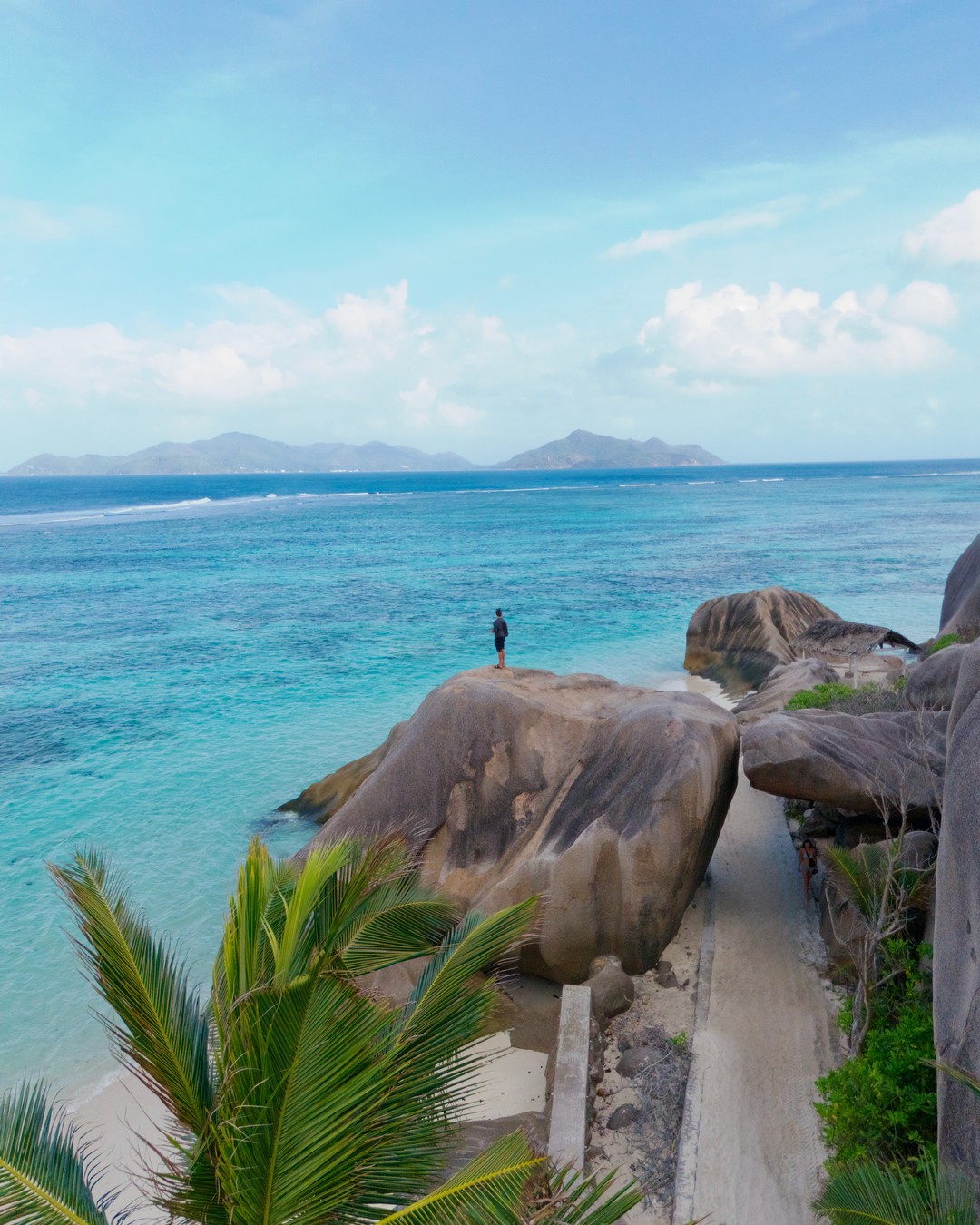
There are around three thousand people living on La Digue and roughly ten thousand tourists there at any one time, and almost nobody drives.
Our host Philip told us those numbers on the way in from the jetty, along with the one I still cannot quite get over: fifteen to twenty thousand foreign workers, on an island you can cycle across in half an hour. He handed us a welcome lemongrass juice and gave us the entire island in a five minute debrief, which is genuinely the best introduction to anywhere we have ever had!
We had two nights. That was a mistake, and I will tell you exactly why.
Almost every La Digue guide you will read is written by somebody who does not say how long they stayed, which is a strange omission when the whole question people are asking is whether to give it a day trip or a few nights. So I want to be straight about that first: two nights, and we would give it three.
In this guide I will tell you what the bikes actually cost, how to do Anse Source d'Argent without the crowds, which beach we were told not to swim at and why, every place we ate with what we paid, and the one thing I would change about how we planned it.
La Digue in Two Nights, My Quick Answer
Give it three nights, hire a bike from wherever you are staying, and buy your Anse Source d'Argent ticket the afternoon before.
That last one is the tip I would want somebody to have told me, and I explain it properly below. Two nights is enough to see the island. Three is enough to stop rushing it.
Getting to La Digue, and Why It Is the Easy Ferry
If you have read anything frightening about Seychelles ferries, it almost certainly was not about this one.
Praslin to La Digue is fifteen minutes and cost us A$52.44 for the two of us. It barely registers! The crossing that gets the horror stories is Mahé to Praslin, which is an hour and fifteen across open water and was genuinely rough when we did it in August. The short hop over to La Digue is a different thing entirely.
Leaving is where the cost is. La Digue back to Mahé was A$229.41, our most expensive single transport line of the whole trip, on the 09:30. Worth knowing when you are working out whether to end your trip here or on Mahé.
One practical thing that caught us out on the way over: a digital ticket is not enough. You collect and print your ticket at the terminal first, then drop your luggage, then board. We arrived an hour and fifteen before departure and were glad we did.
The Bikes, and What They Actually Cost
About 100 rupees a day, hired straight from our accommodation. You can also get them from any of the shops around La Passe by the jetty.
I am putting that number in bold because nearly every other guide quotes 150 to 200 rupees, and if you hire from where you are sleeping rather than from a shop by the port you will often do better. Ask your host before you walk down to the jetty.
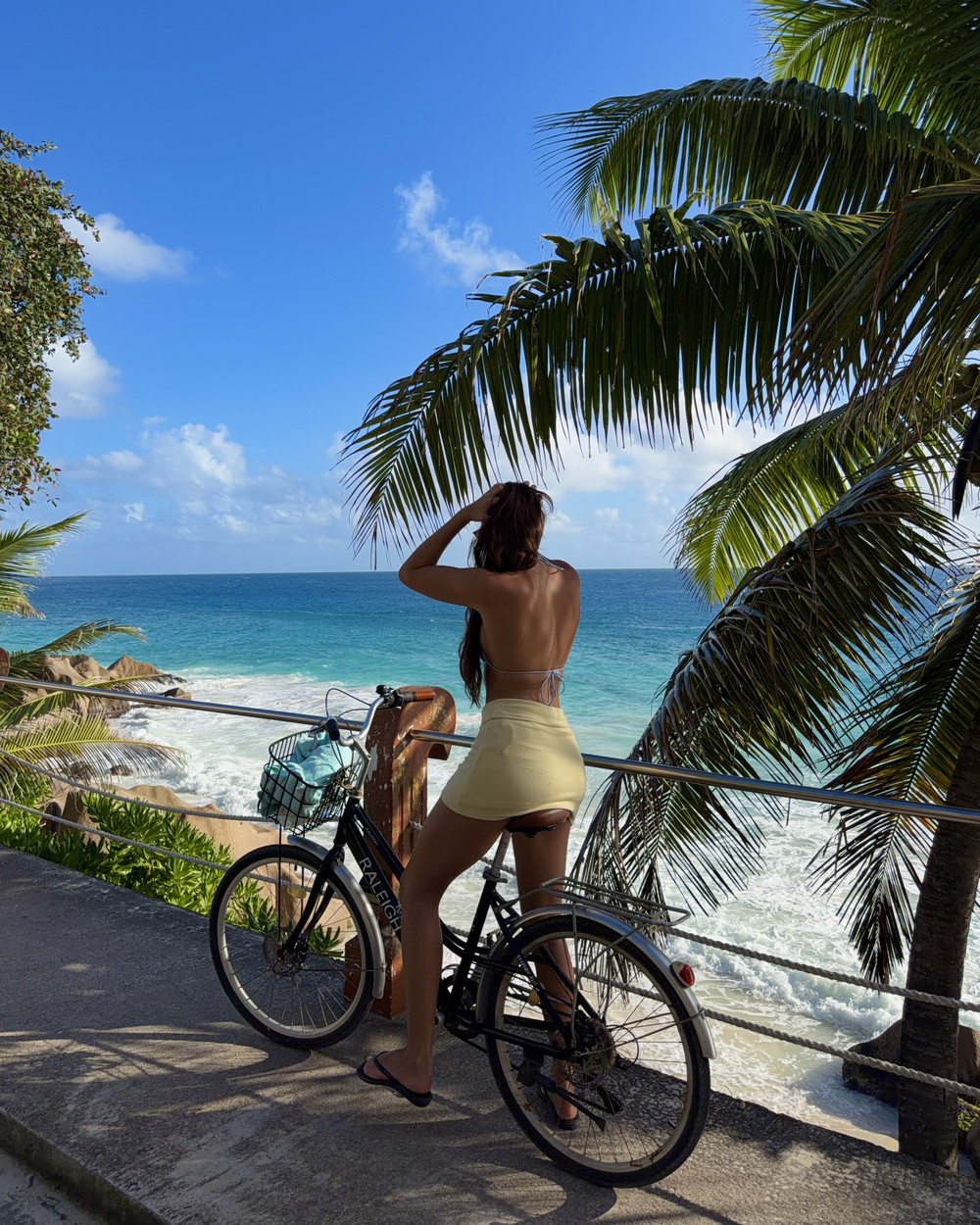
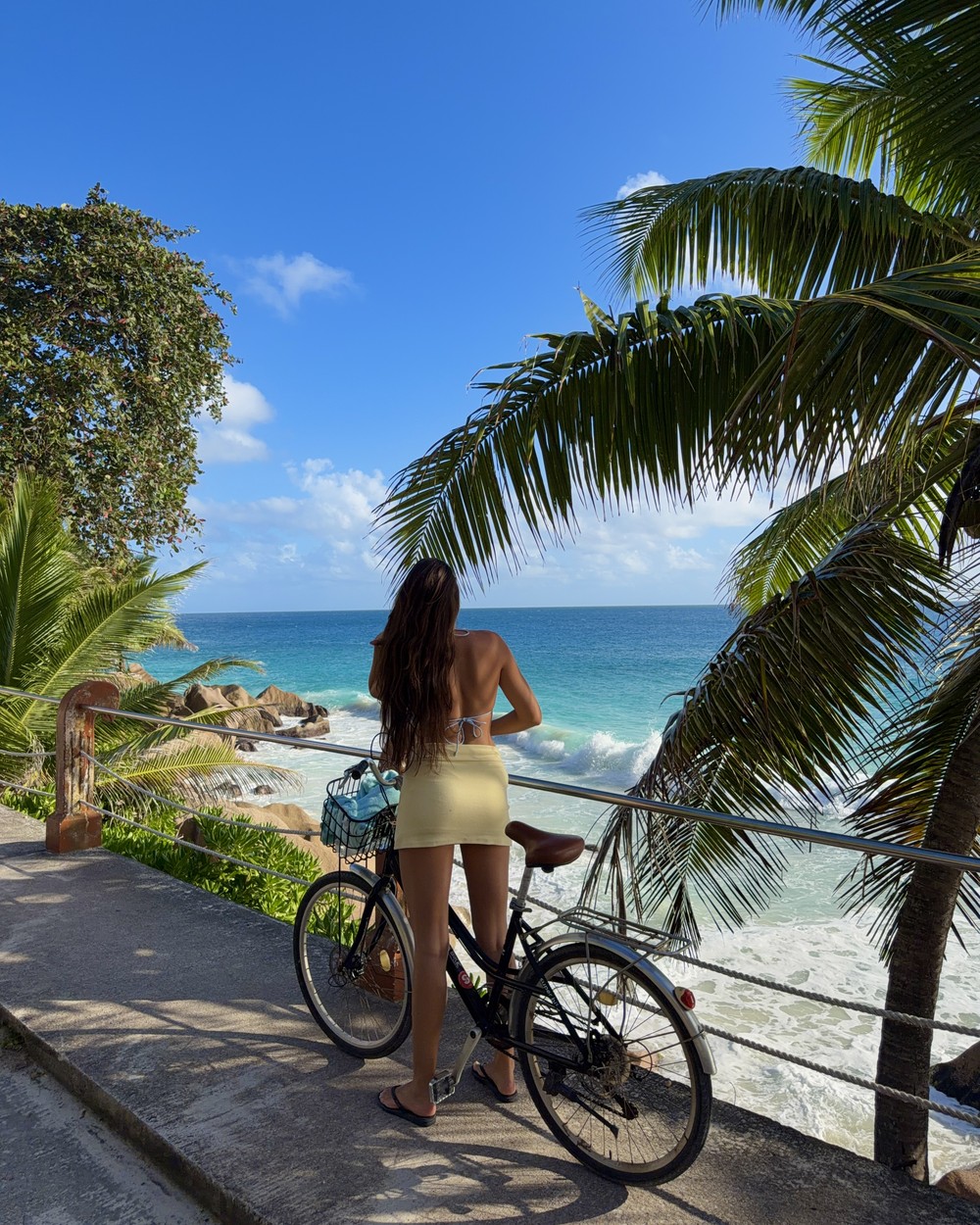
You genuinely do not want a car here. There are a handful on the island and they feel absurd. The whole place is flat enough that the riding is easy, the distances are tiny, and honestly the ride between the beaches is as good as the beaches themselves!
Anse Source d'Argent, and the Ticket Trick
The most photographed beach in the world, and the entry fee catches people out: SCR 150 per person to get in, through the L'Union Estate.
Here is the part worth knowing. The ticket lasts 24 hours and gives you multiple entries. So if you buy it from about 4pm onwards the day before, you can use the same ticket for the whole of the next day. One fee, two visits, including a sunset and a morning.
That matters more than it sounds, because the beach is a completely different place depending on when you stand on it.
At sunset it is busy. Not unbearable, but shoulder to shoulder in the good spots and you are waiting for gaps between other people's photos.
We went back the following morning and had the entire thing completely to ourselves! Daniel's words on camera were "there is no one here, we've got the whole thing to ourselves", and that is the version of this beach worth planning around.
One thing I am not going to state as fact: the opening hours. Our note from the day says 6am to 6pm, and several other guides list the estate as 7:30am to 5:30pm. One of us is wrong and I would rather tell you that than publish a time you plan a morning around. Check it at the gate when you buy the ticket, which you will be doing the afternoon before anyway.
What is not in doubt is that the gate closes to new entries at 6pm and you can still walk out after that if you have stayed for the sunset.
Grand Anse, and the Beach We Were Told Not to Swim At
This is the one nobody warns you about properly, so here it is.
Grand Anse is about twenty minutes on the bike from the main town, and in August the sea there was dangerous. Not choppy, dangerous. There was a huge current, hardly anybody was in the water, and locals were actively telling people not to swim. Daniel filmed one of them pointing at the swell.
It is not a freak day, it is the season. From roughly May to September the southeast trade winds blow straight onto that side of the island, and the north and west coasts sit in the shelter. We wrote up the whole pattern in our guide to the best time to visit Seychelles, because it decides which beaches work on which dates and almost nobody explains it.
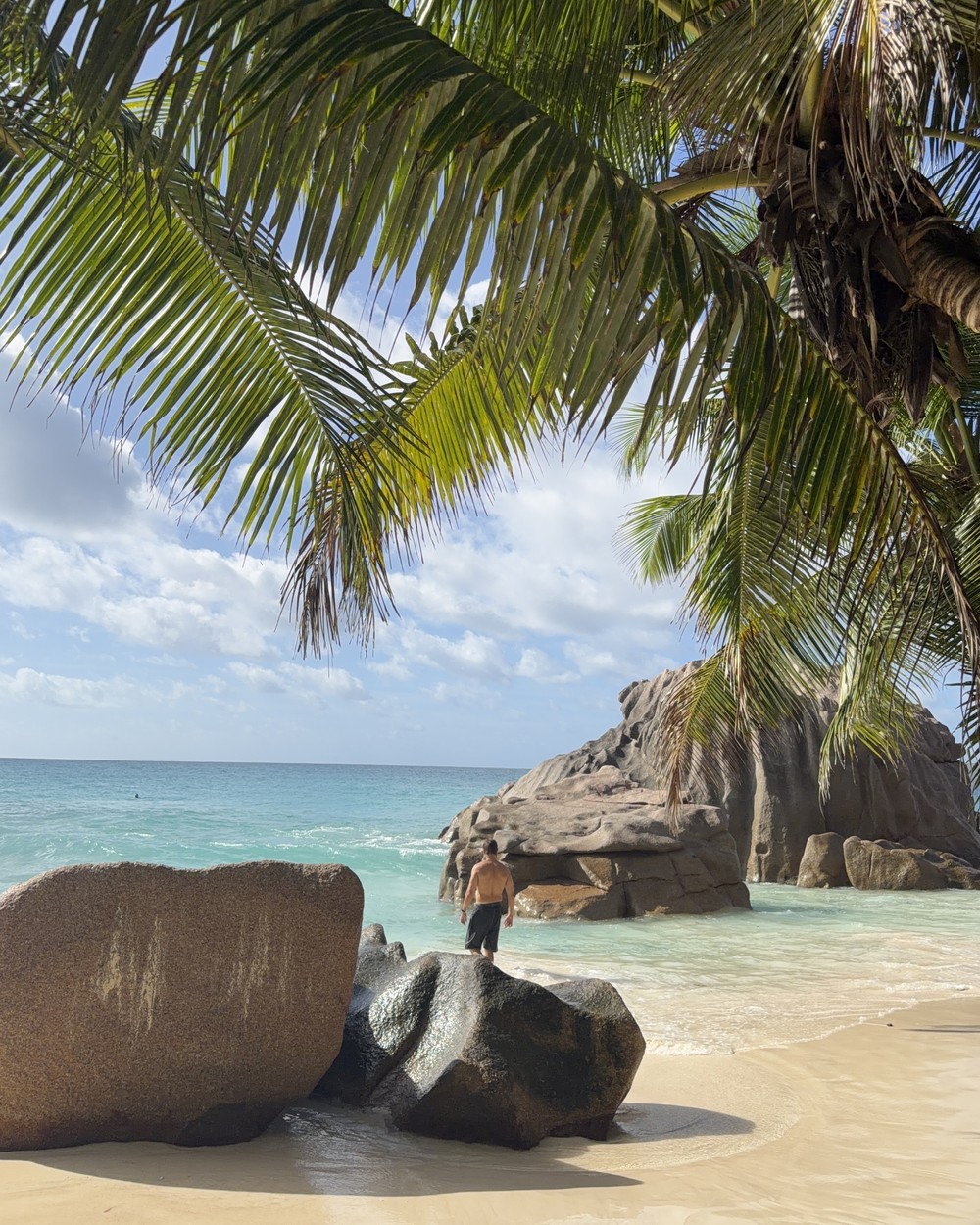
Go anyway. It is a beautiful stretch of sand with the sweetest palm leaf shade huts the whole way along it, and a palm forest behind where you leave the bikes! Just go for the walk rather than the water.
Ellen's tip if you do go: head left when you reach the beach. That was the prettiest corner, next to the rock with the palm trees.
If you want to keep going, Anse Cocos is about twenty five minutes on foot past Grand Anse over the headland, and there is a natural pool at its north end that is safe when the open water is not.
The North Coast Ride, Which Is the Best Hour on the Island
If you only do one thing on a bike here, ride north from the jetty and just keep stopping.
- Anse Sévère, two minutes north of the bike hire and right next to Bikini Bottom. Calm, shallow and genuinely good for a swim rather than a photograph. The easy first stop.
- Anse Patates, about five minutes further on. Small, all granite boulders, and completely lovely!
- Anse Gaulettes, keep going north and it gets quieter again.
The north coast is a string of small beaches rather than one big destination, so the ride is the point as much as any single beach is. That is the sentence I would give anyone deciding how to spend a day here.
Where We Ate and Drank, and What Everything Cost
La Digue food is better and cheaper than we expected, and the takeaways are where the value is.
The cheap end, and all of it good:
- Rey & Josh, about A$12. Chicken, rice and salad, and it was actually amazing! One of the best takeaways we had anywhere in Seychelles and not oily at all.
- KZ Takeaway, about A$15. Google Maps said it was shut. We went past and checked anyway and it was wide open, so do that rather than trusting the listing. The owner is absolutely lovely, the chicken and chips was an 8 out of 10, and you can go inside and get vinegar for the chips!
- Jacks Takeaway, about A$12. A solid 7 out of 10.
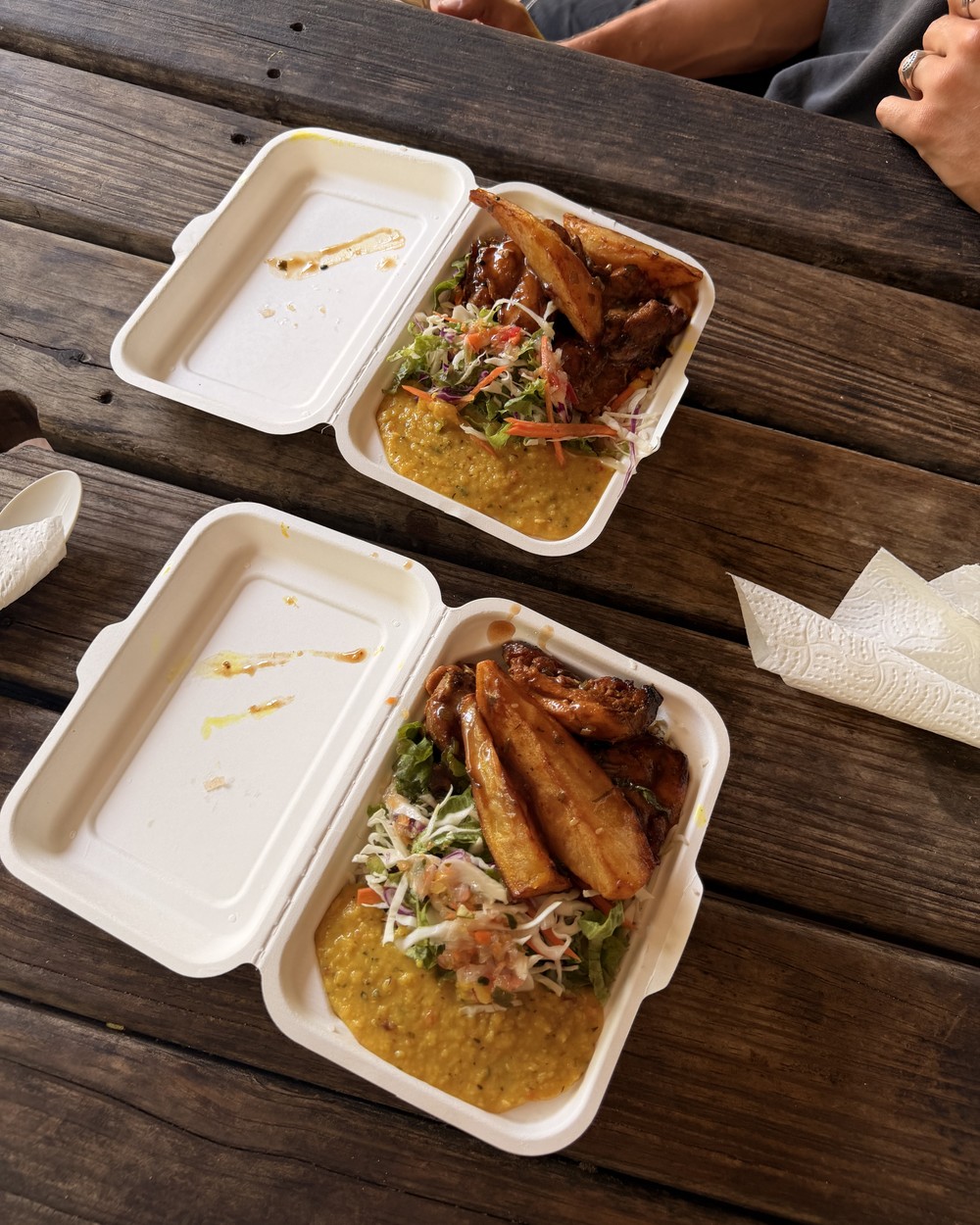
The two sit-down meals worth the money:
- Le Repaire, about A$36. Our accommodation owner told us this was the best pizza on the island, so we had a lasagne and a pizza and it was absolutely unbelievable. A 10 out of 10!
- Natural Bar Grill and Drinks, about A$65 each. This place is a must, and try to get there just before sunset. It is a three course set menu: you pick three meats from about six, and the sides and dessert are included. Everything is grilled fresh and it arrives as one big platter. It is not cheap, but the portions are enormous.
The Two Bars, and an Honest Note on the Coconuts
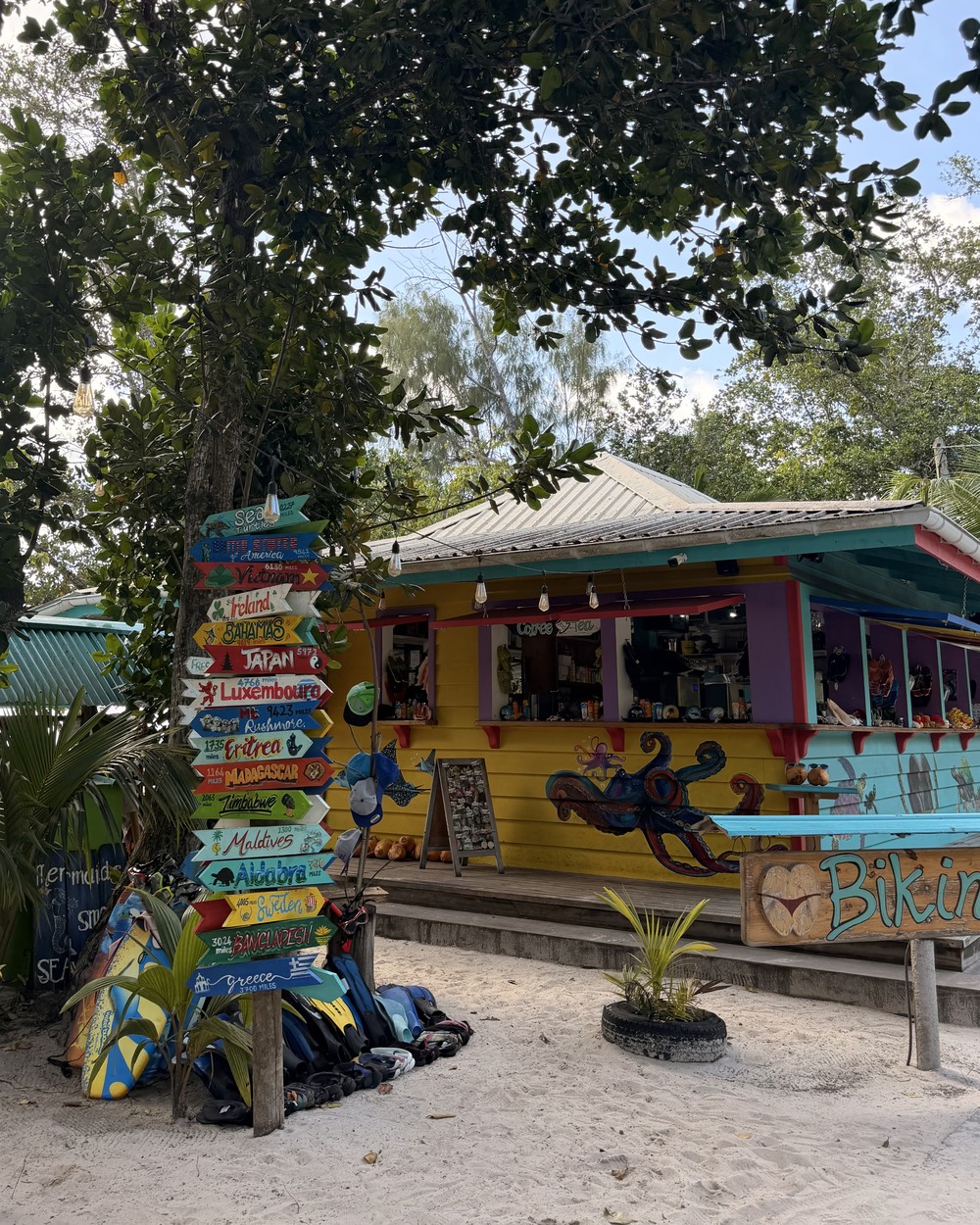
Bikini Bottom is right by Anse Sévère and it is the one everybody photographs, with the painted signposts and the octopus mural.
We paid about A$9 for a coconut, which is comfortably the most expensive coconut of our lives! You can also hire snorkelling gear and body boards there. And here is the honest bit: cocktails are about A$25 against about A$17 two minutes down the road. We noticed, and we would still rather go back to Bikini Bottom, because the setting is the thing you are paying for.
Island Best Bar is the two-minutes-down-the-road one. Get the mango colada. Ours was made with the Takamaka dark rum we had tasted back on Mahé, which was a lovely bit of joining up. Order a Seybrew too, the local beer. As Daniel put it, they cannot make a coffee in this country but they absolutely know how to make a good beer!
The Vegetable Market, Which Opens Every Single Morning
Small, easy to miss, and one of my favourite twenty minutes on the whole island!
It runs every morning, every day. We got tiny bananas, papaya and star fruit for about A$10. The seller told us the star fruit is anti stress and good for high blood pressure, which I have not verified and have chosen to believe anyway.
If you are self catering, this is where to do it. Our apartment had a kitchen and that is a large part of why our whole Seychelles trip stayed affordable, which we break down properly in what twelve days in Seychelles actually cost us.
Where We Stayed, and the Booking Mistake
MAZU apartments, A$701 for two nights, about A$351 a night.
That is more than double what either of our Mahé places cost, and I want to be honest about why: we booked two days out in peak August. That is a last minute price in the busiest month, not the going rate, and it is the one thing I would genuinely change about our trip.
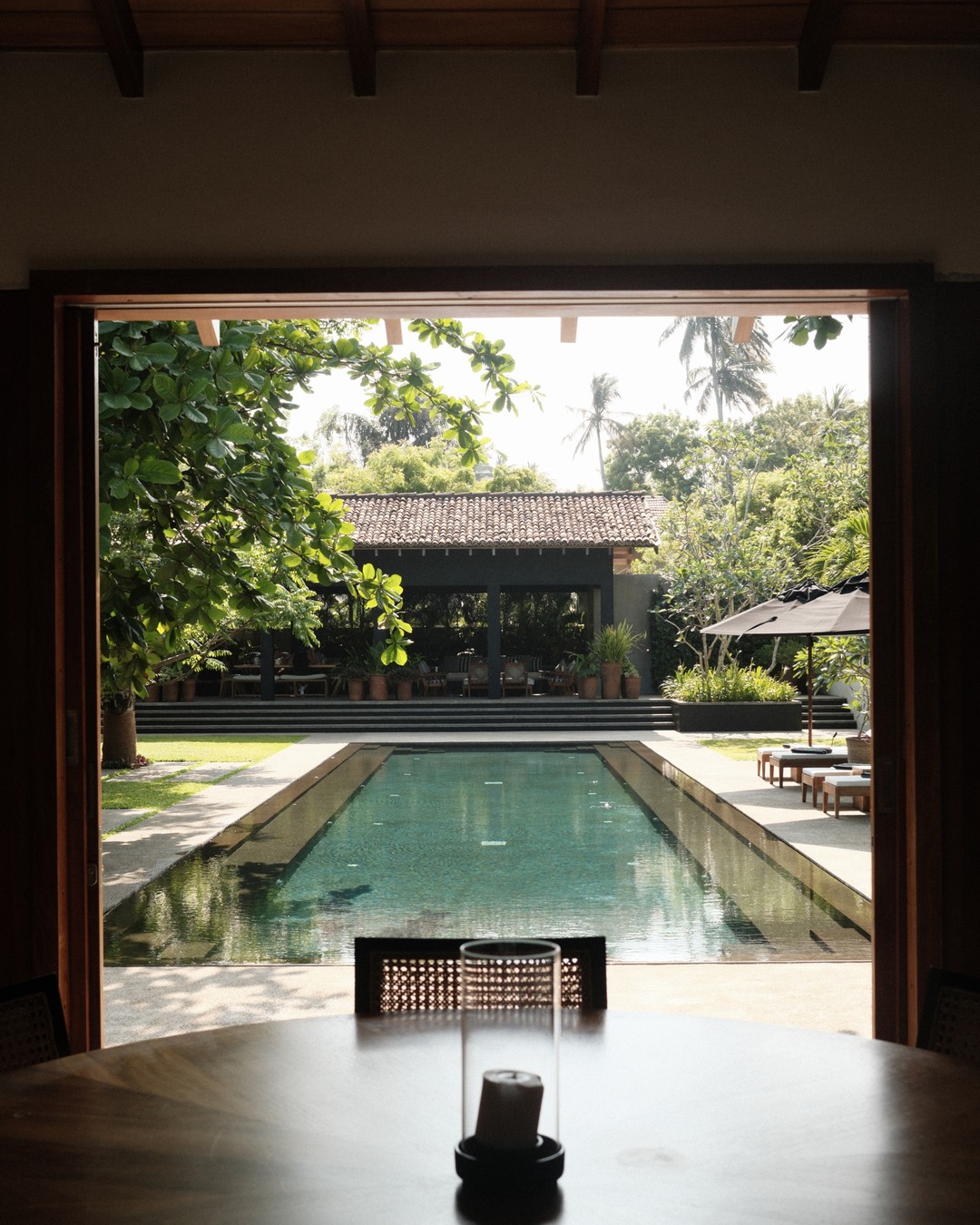
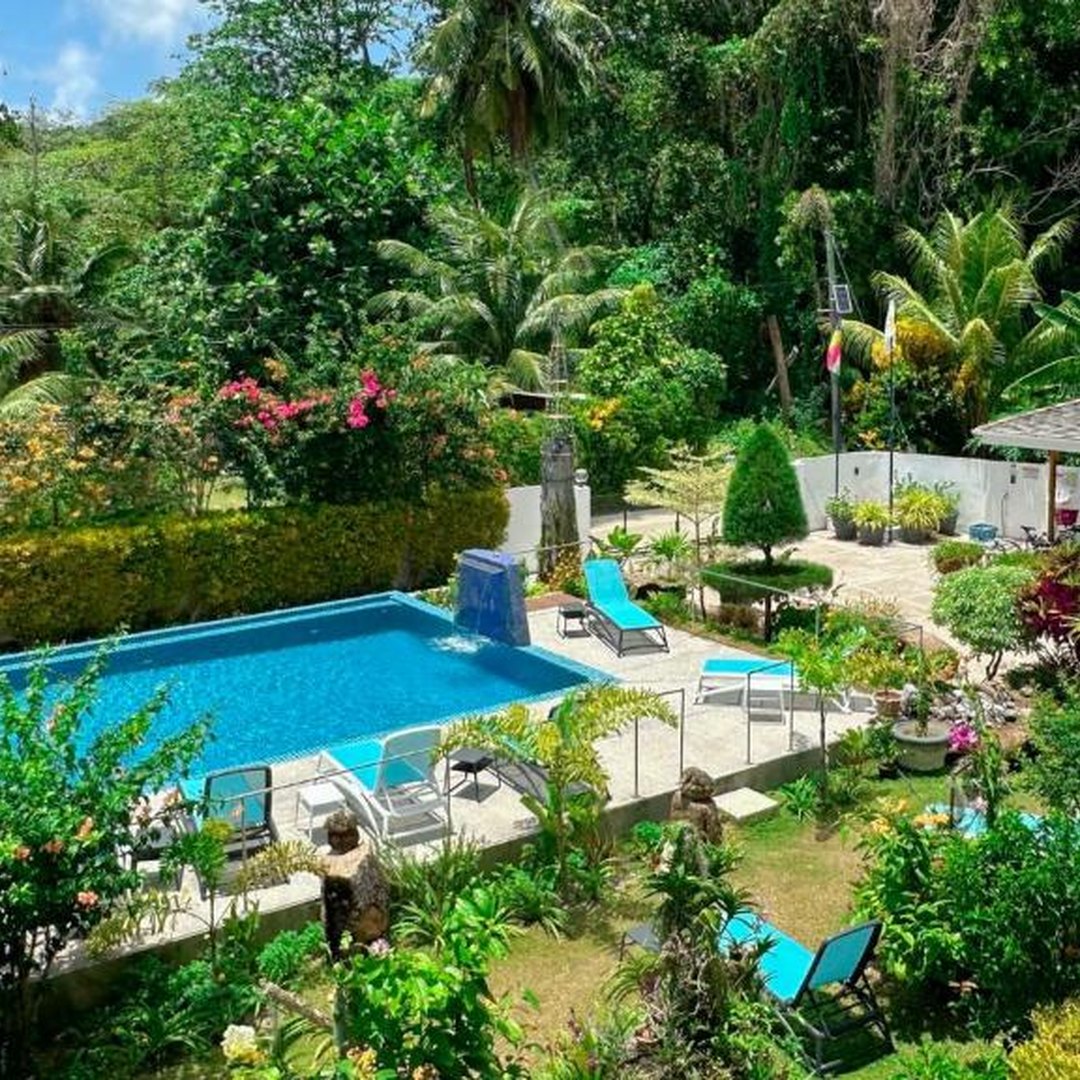
It was the biggest place we stayed anywhere in Seychelles, with a pool, and Philip picking us up with a lemongrass juice set the tone for the entire stay! But book earlier than we did.
MAZU apartments garden view and pool
The biggest place we stayed anywhere in Seychelles, with a pool, and Philip collects you from the jetty. About A$351 a night because we booked two days out in peak August, so treat that as a last minute price rather than the going rate. Bikes came from here at about 100 rupees a day.
What I Would Do Differently
Three nights, not two. Ellen said it on the last morning, straight to camera: "Sad to be leaving this morning, I wish we had one more night. I think three nights here would be perfect."
Two nights means one full day, because your arrival afternoon and your departure morning both go on ferries. One full day is enough to ride the north coast and do Source d'Argent once. It is not enough to do Source d'Argent twice, ride out to Grand Anse, walk on to Anse Cocos and still have an afternoon doing nothing, which is what this island is actually for.
Book earlier. See above.
Buy the Source d'Argent ticket the afternoon before. One fee, sunset and sunrise.
The full eight day route across Mahé, Praslin and La Digue, with both ferry crossings placed on the right mornings and every spot pinned on a map, is in our Seychelles itinerary. It is A$9.99 and it is the fortnight of working this out that you get to skip.
Watch Our Seychelles Vlog
La Digue starts about two thirds of the way in, bikes and all.
Watch our Seychelles vlog on YouTube
FAQs About La Digue
How many days do you need on La Digue?
Three nights. We had two, which gave us one full day, and Ellen said on the last morning that she wished we had one more. Two nights works if it is all you have, because your arrival and departure both lose time to ferries.
Do you need a bike on La Digue?
Yes, and you do not need anything else. About 100 rupees a day, hired from your accommodation or from the shops around La Passe. There are more bikes than people here and a car would be absurd.
How much is Anse Source d'Argent?
SCR 150 per person through the L'Union Estate. The ticket lasts 24 hours with multiple entries, so buying it from about 4pm the day before covers you for the whole of the next day too.
Can you swim at Grand Anse?
Not always, and not when we were there. In August the southeast trade winds hit that side of the island, there was a huge current and locals were telling people not to go in. It is still worth the twenty minute ride for the beach itself, and head left when you arrive.
How do you get to La Digue?
Ferry from Praslin, fifteen minutes, about A$52 for two. It is the easy crossing. Mahé to Praslin is the rough one, and La Digue back to Mahé was our most expensive transport of the trip at A$229.
Where is the best food on La Digue?
Rey & Josh for takeaway at about A$12, and Le Repaire for a proper meal, where the lasagne and pizza were a 10 out of 10. Natural Bar Grill just before sunset is the splurge at about A$65 each, and the portions are huge.
Is La Digue expensive?
The island itself is not. The takeaways are around A$12 to A$15 and the market is cheap. Accommodation is where it bites, and ours was A$351 a night because we booked two days out in peak season. The full breakdown is in what Seychelles cost us.