Did We See the Big Five in Seven Days? Our Honest Day by Day Record
Every article you read about this hedges. No guarantees, sightings are unpredictable, leopards are famously shy. All true, all useless when you are trying to work out whether a week is enough.
So here is the opposite of that: exactly what we saw, on which day, over seven days at Welgevonden Game Reserve in South Africa. It was our first ever safari and our first time in the country.
The short answer is yes, we saw all five. The long answer is that four of them happened almost immediately and the fifth took until the second to last night, and even then it was about eleven seconds of an animal walking through a bush in the dark.
Did We See the Big Five in a Week? My Quick Answer
All five, with the leopard last on day six. Rhino, elephant and buffalo were straightforward. Lion took a couple of goes to get a proper look at. Leopard nearly did not happen.
If you are booking a week at a private reserve, the honest expectation is that you will very likely get four and the fifth is the one you hold your breath for.
Where We Were, and Why It Matters to the Answer
Welgevonden Game Reserve, in the Waterberg in Limpopo. It is a private reserve rather than a national park, which is the single biggest factor in how quickly we saw things.
A few things about it that are worth knowing, and these come from reading rather than from us: it covers around 36,000 hectares inside the UNESCO Waterberg Biosphere Reserve, it is malaria free all year because of the altitude, and it is roughly two and a half hours from Johannesburg by road or a short charter flight. It holds more than fifty mammal species and close to three hundred birds.
The reason a private reserve changes the Big Five question is simple. There are far fewer vehicles, guides can go off the road to follow something, and they talk to each other. In a national park you are on the roads with everybody else.
The First Two Days, and Three of the Five
Most of the Big Five happened before we had really settled in, which is not what I expected and is apparently fairly normal at a private reserve.
Day One: Three of Them Before We Had Properly Arrived
We had not been on a game drive yet. We were still driving in.
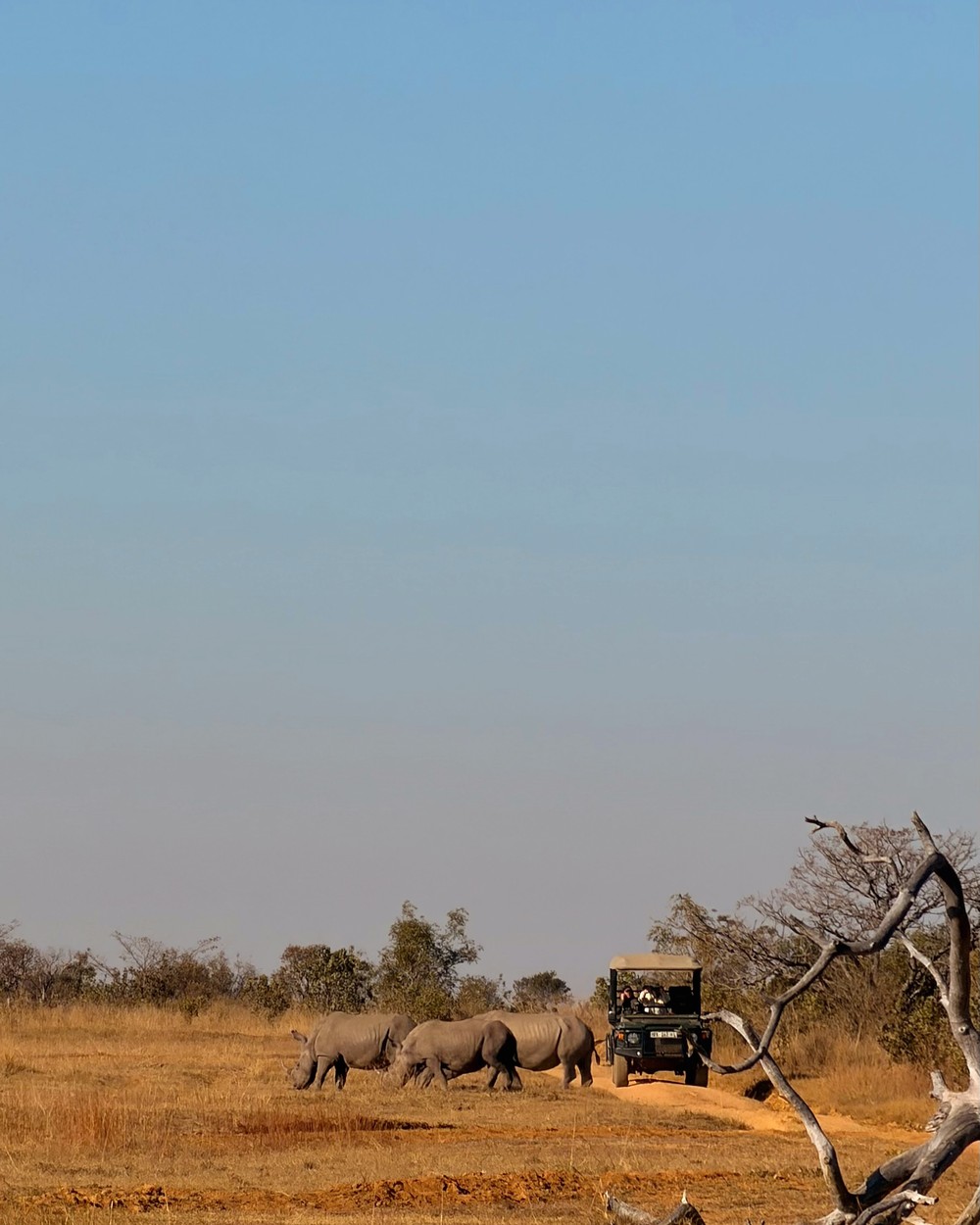
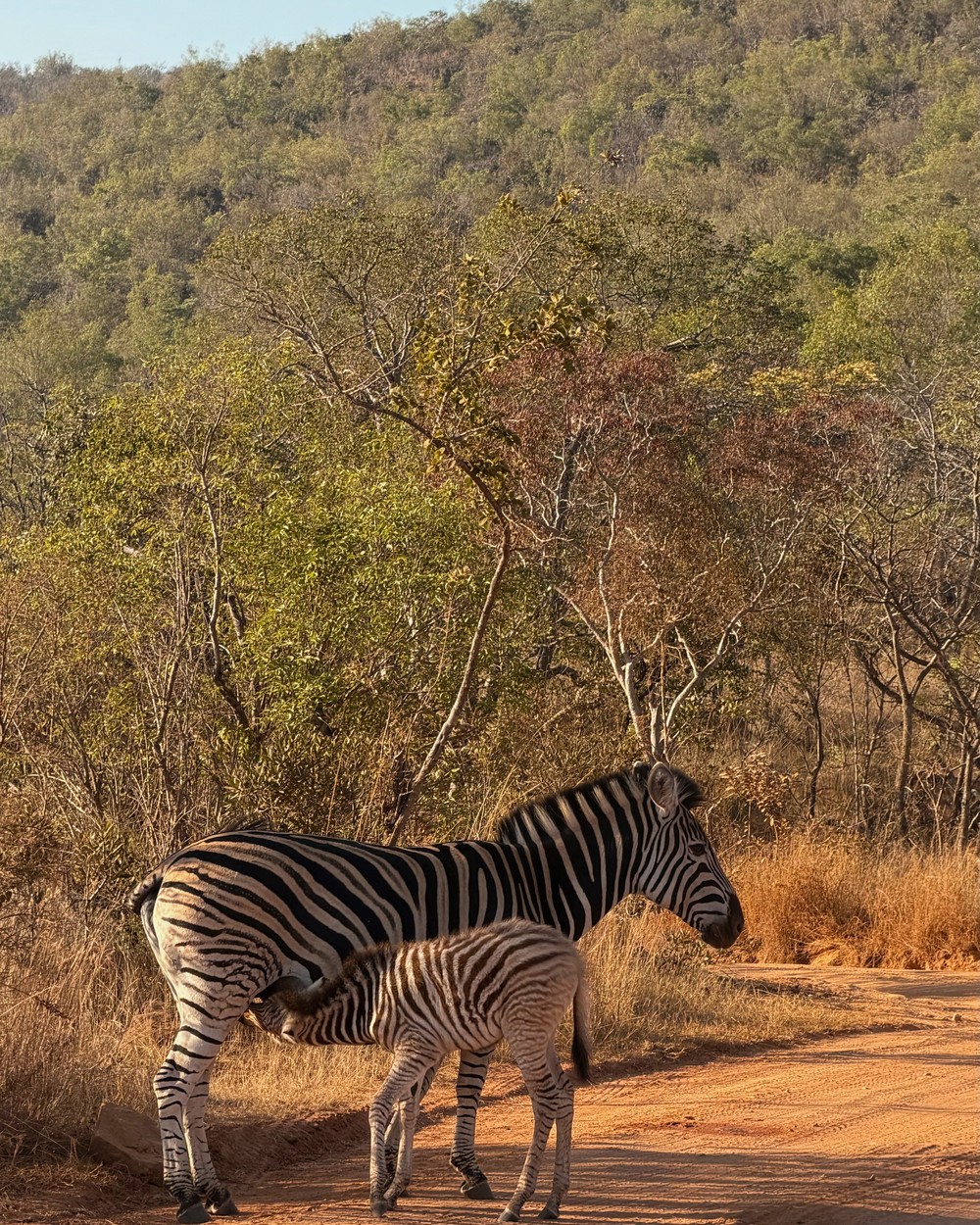
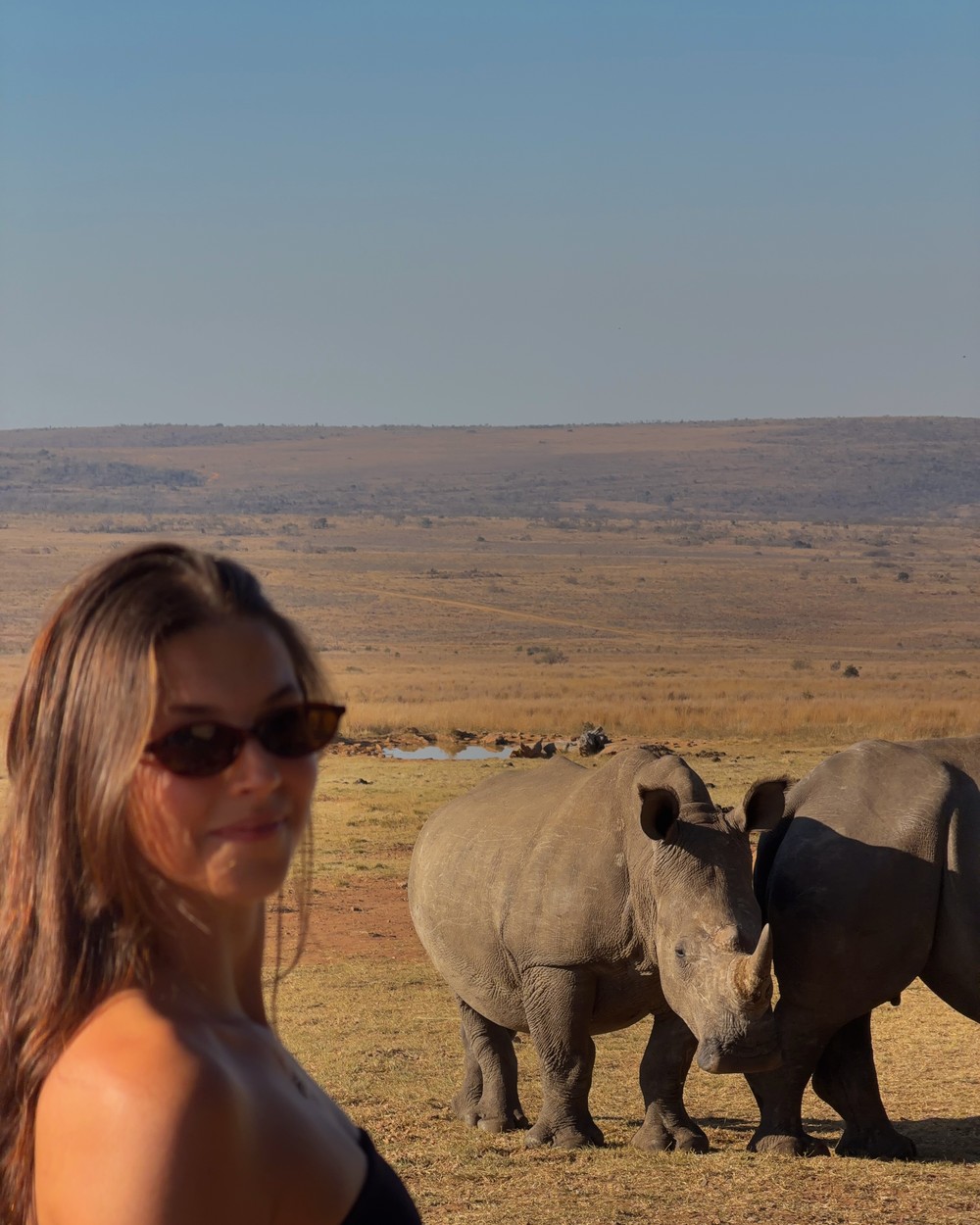
Within about ten minutes we had seen zebras, warthogs and wildebeest. Then we pulled up at the lodge and there were rhinos at the watering hole in front of it, which is not a normal way to arrive anywhere.
That afternoon there was a pool with rhinos visible from it. My actual words were that it was an afternoon dip with a side of rhinos, and I stand by the phrasing.
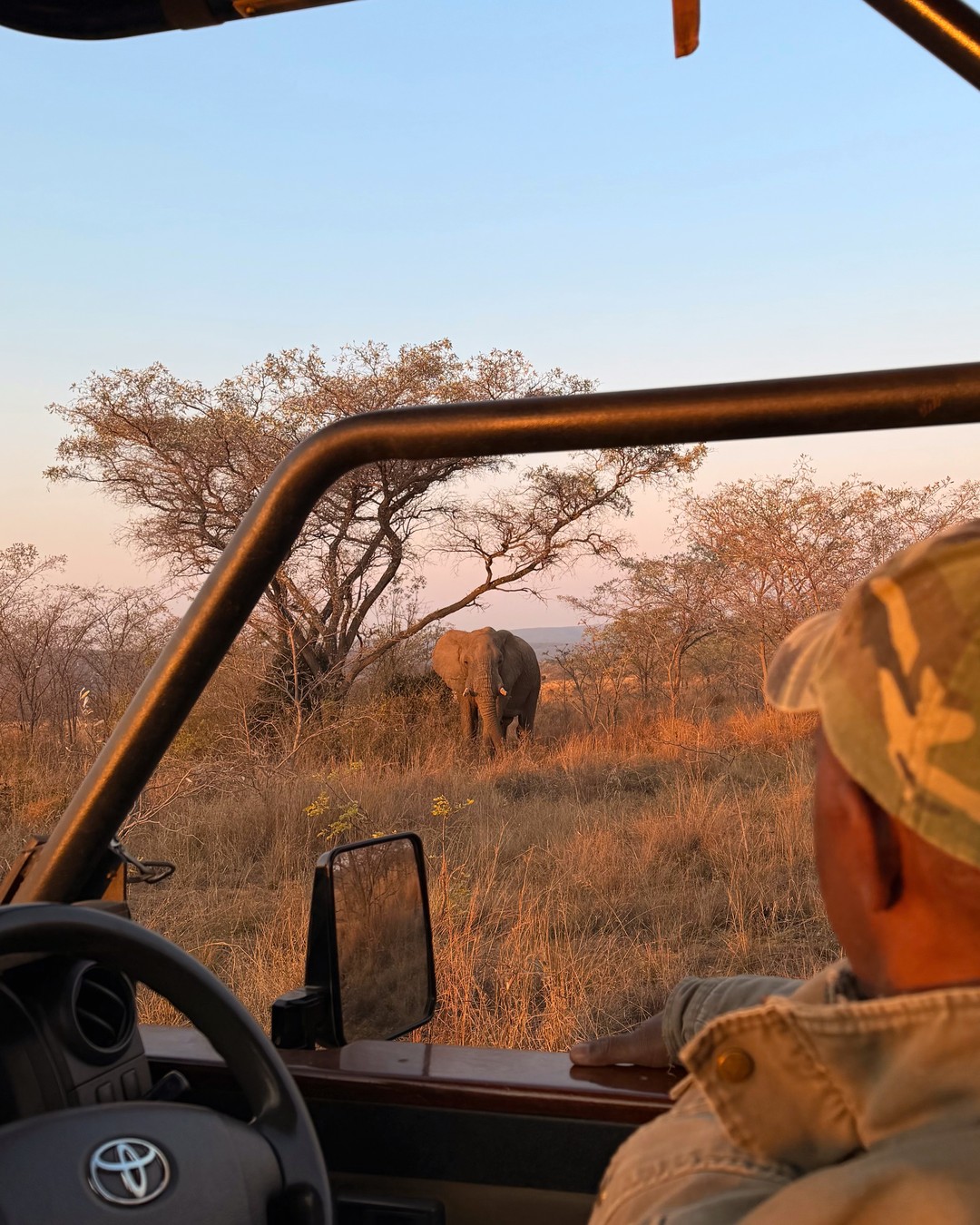
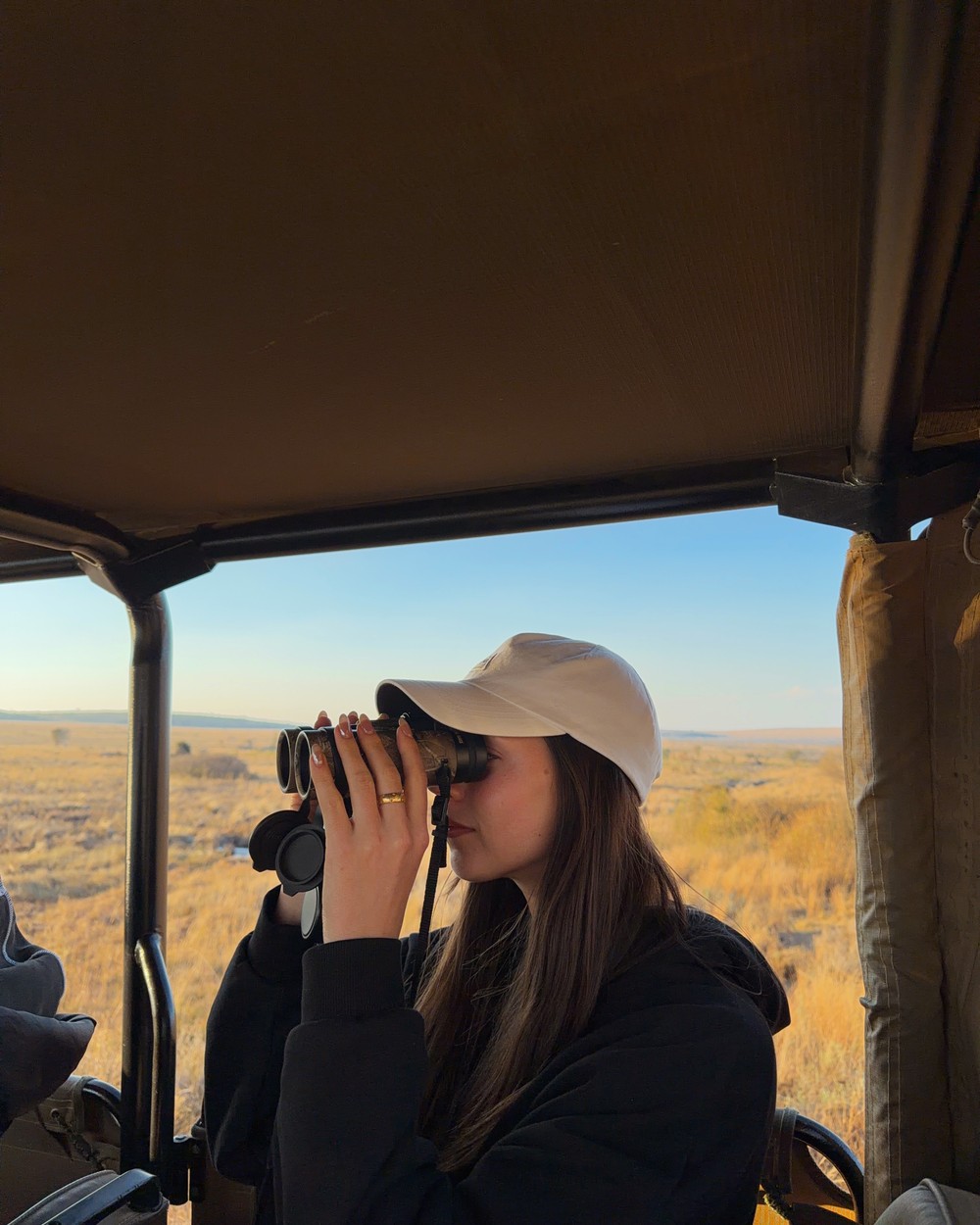
On the first drive that evening we saw elephants, a lion in the far distance that we could only really make out through binoculars, and a hippo sitting in a river with a rhino behind it.
So by the end of day one: rhino, elephant, and technically lion. I say technically because seeing a shape at that range does not feel like the thing you came for.
Day Two: The Rhino Situation Continues
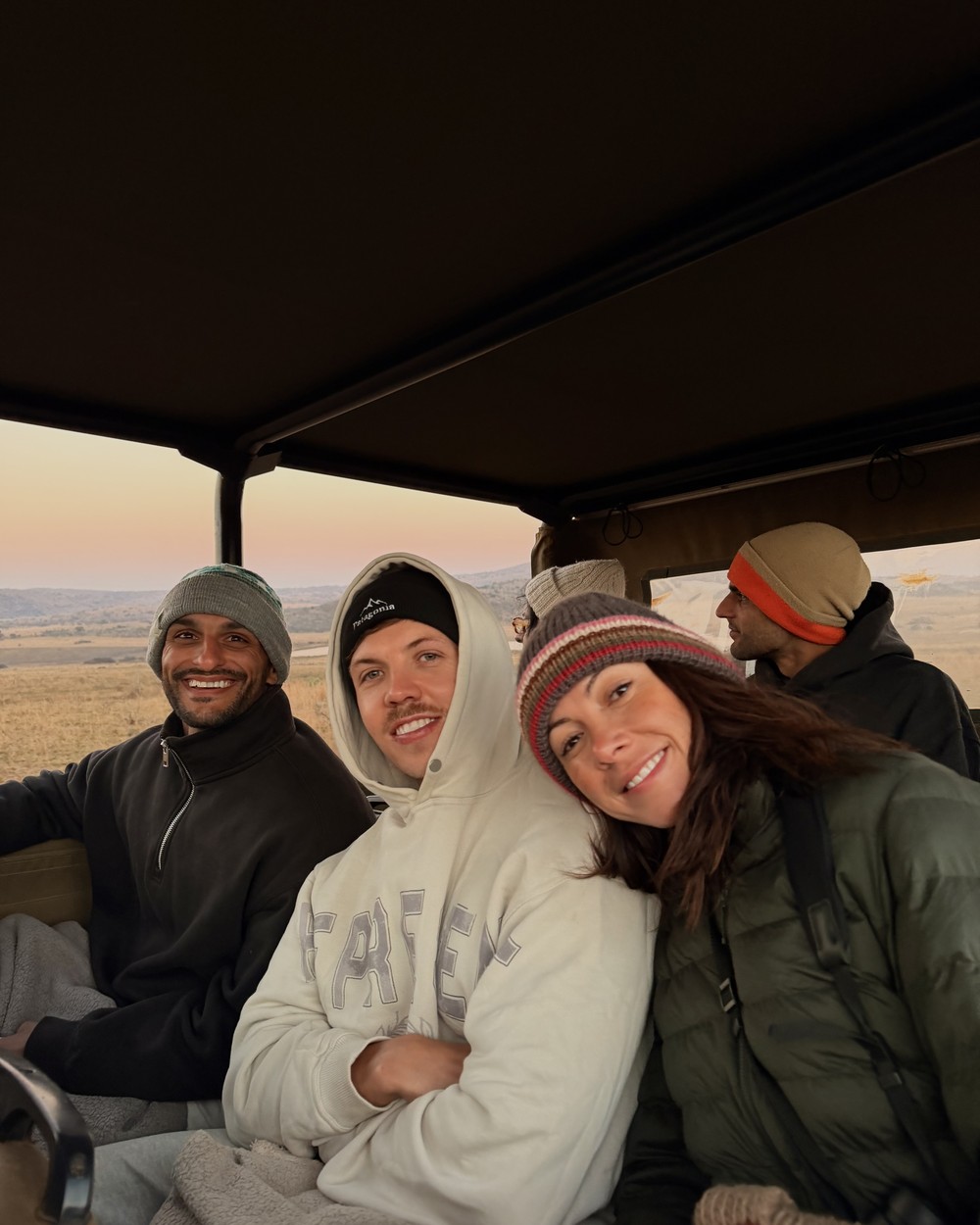
A 6:30am start, which becomes the rhythm of the whole week.
We spent a lot of this morning on rhino, including stopping to look at rhino dung properly, which I did not expect to find as interesting as I did. You can touch it. It is hard, and it smells about how you would imagine.
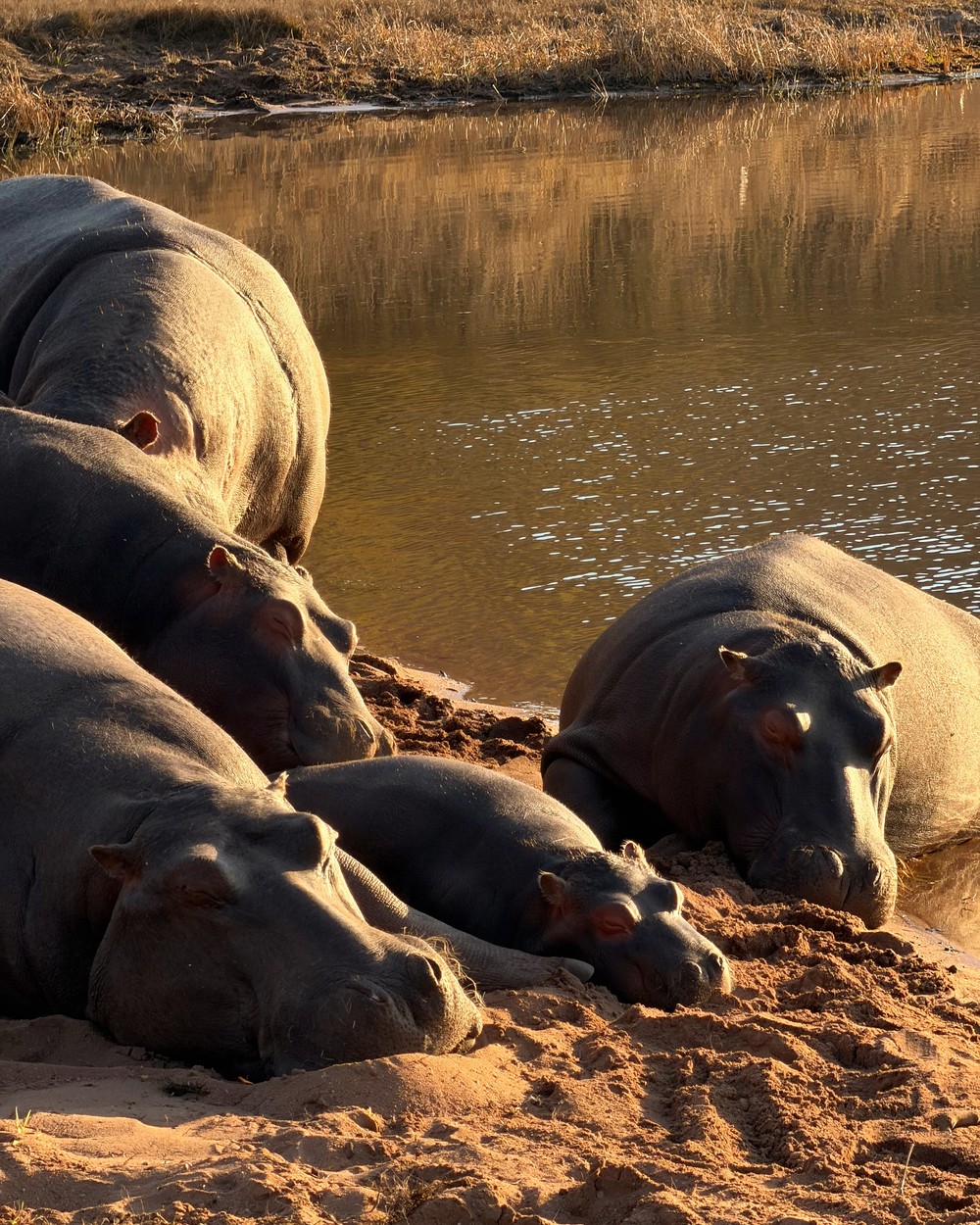
Rhinos were the animal we saw most across the entire week, which surprised me. They were at the lodge, at the watering hole outside our room, and walking in front of the vehicle on several drives.
The Middle of the Week, Where It Stops Being a Checklist
No new Big Five members for three days. These were the best days of the trip.
Day Three: Learning to Actually Look
This is the day the safari changed for me, and it had nothing to do with a new animal.
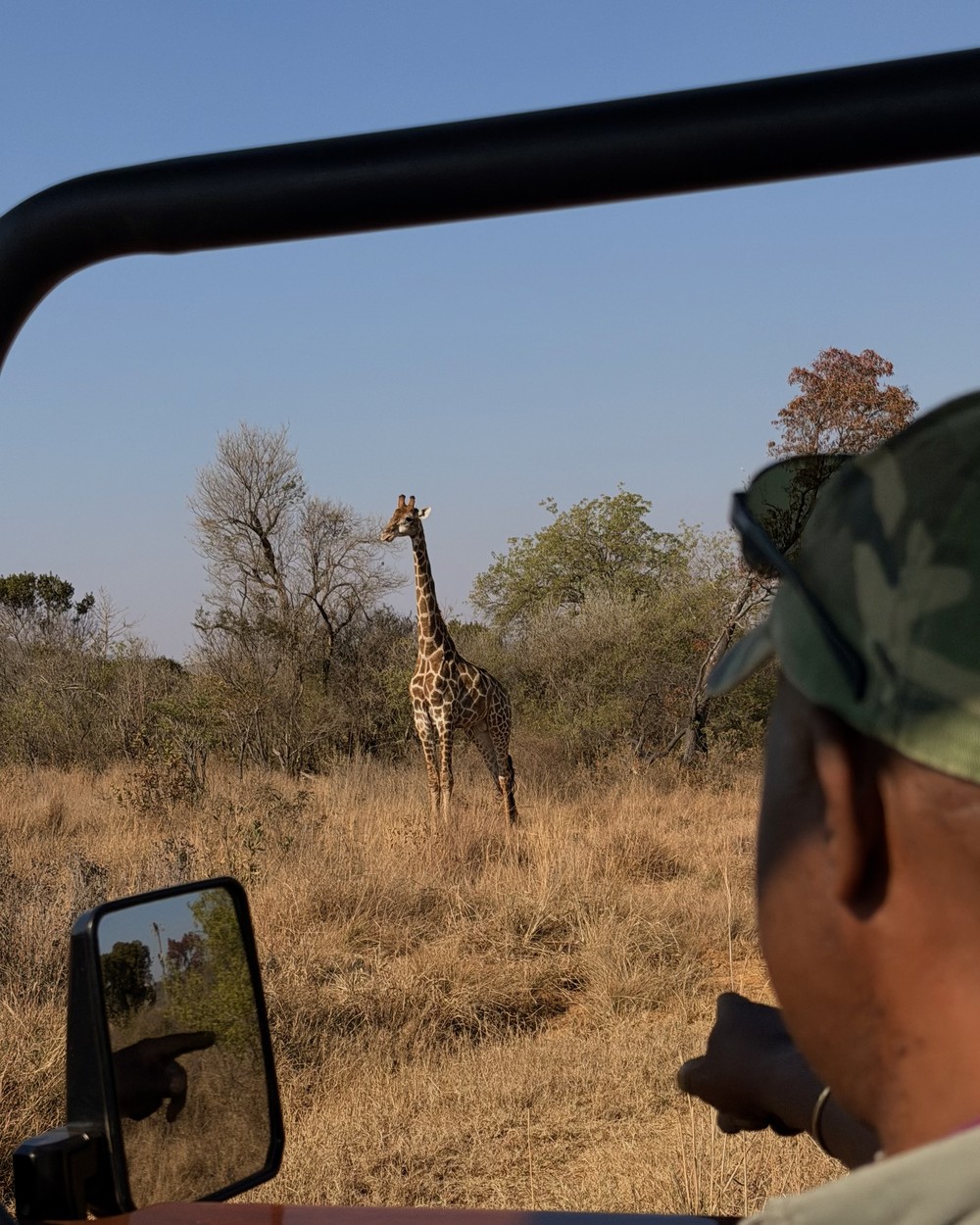
Our guide, Phineas, has been doing this for thirty five years and speaks eleven languages. On day three he started teaching us to read what we were looking at rather than just point at it.
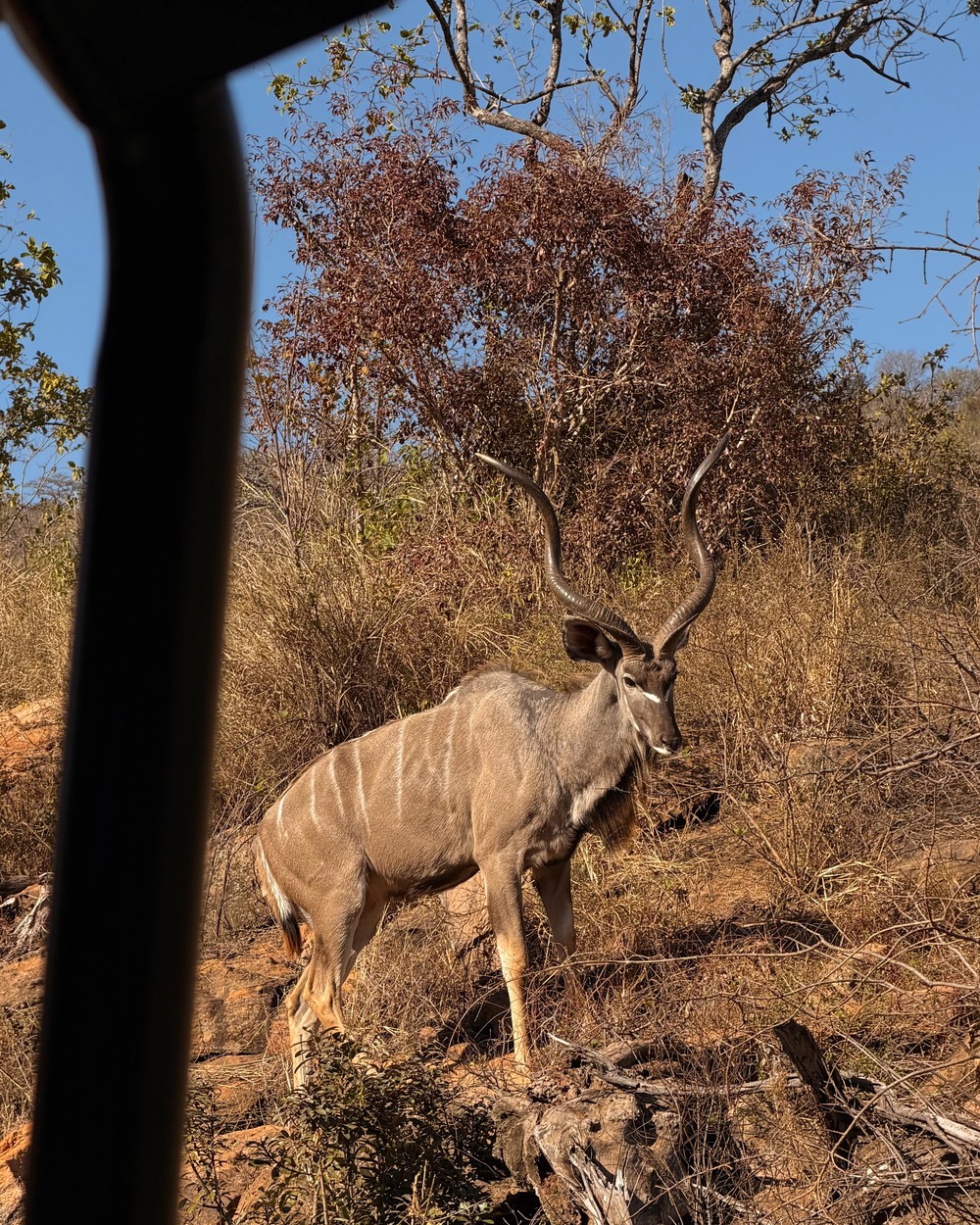
Kudu tails are a following signal. The underside is white, and when they run it fluffs out and flashes, so the herd can follow each other through thick bush without seeing much else.
Claw marks in a track tell you what made it. A cat's claws retract, so a big cat leaves a print with no claw marks at all. A brown hyena leaves claws, and the print is wider. Welgevonden is one of the places brown hyena actually turn up, which is why that came up at all.
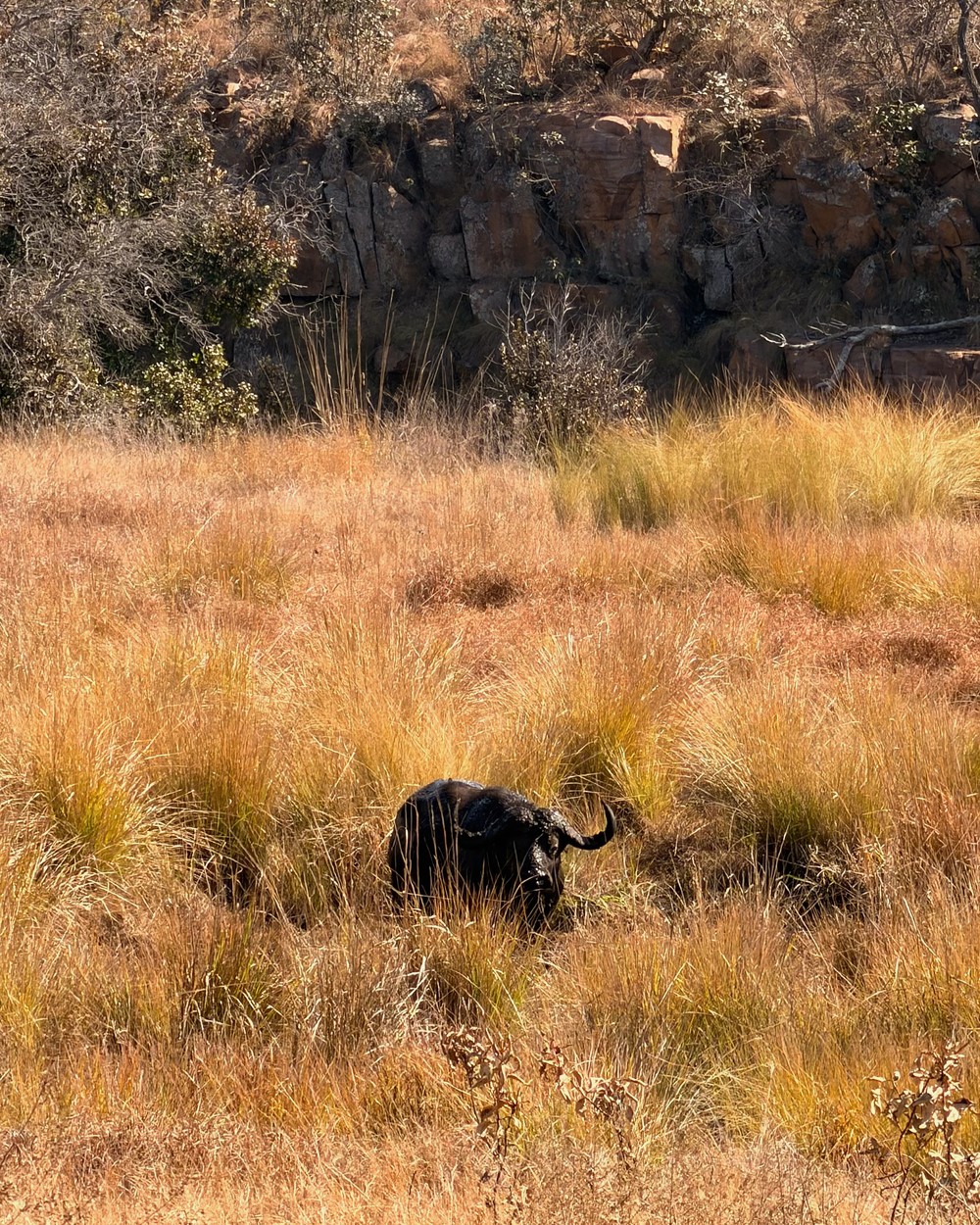
Buffalo are most dangerous on their own. In a herd they are relaxed. Alone, an animal trusts nothing around it, feels vulnerable, and will attack first. Ours was alone and looked, to my untrained eye, completely harmless.
That last one matters for the Big Five list, because buffalo went on the board this week without any drama at all. They are the one nobody gets excited about and the one you will almost certainly see.
Day Four: Coffee on the Plains and the Drunk Elephant Story
Every morning drive stops for coffee somewhere out on the plains, which is a genuinely lovely part of the routine and not something I had pictured.
They set it up off the back of the vehicle: coffee, tea, and rusks, which are a South African biscuit you dunk. They also offer Amarula in your coffee, which tastes like Baileys.
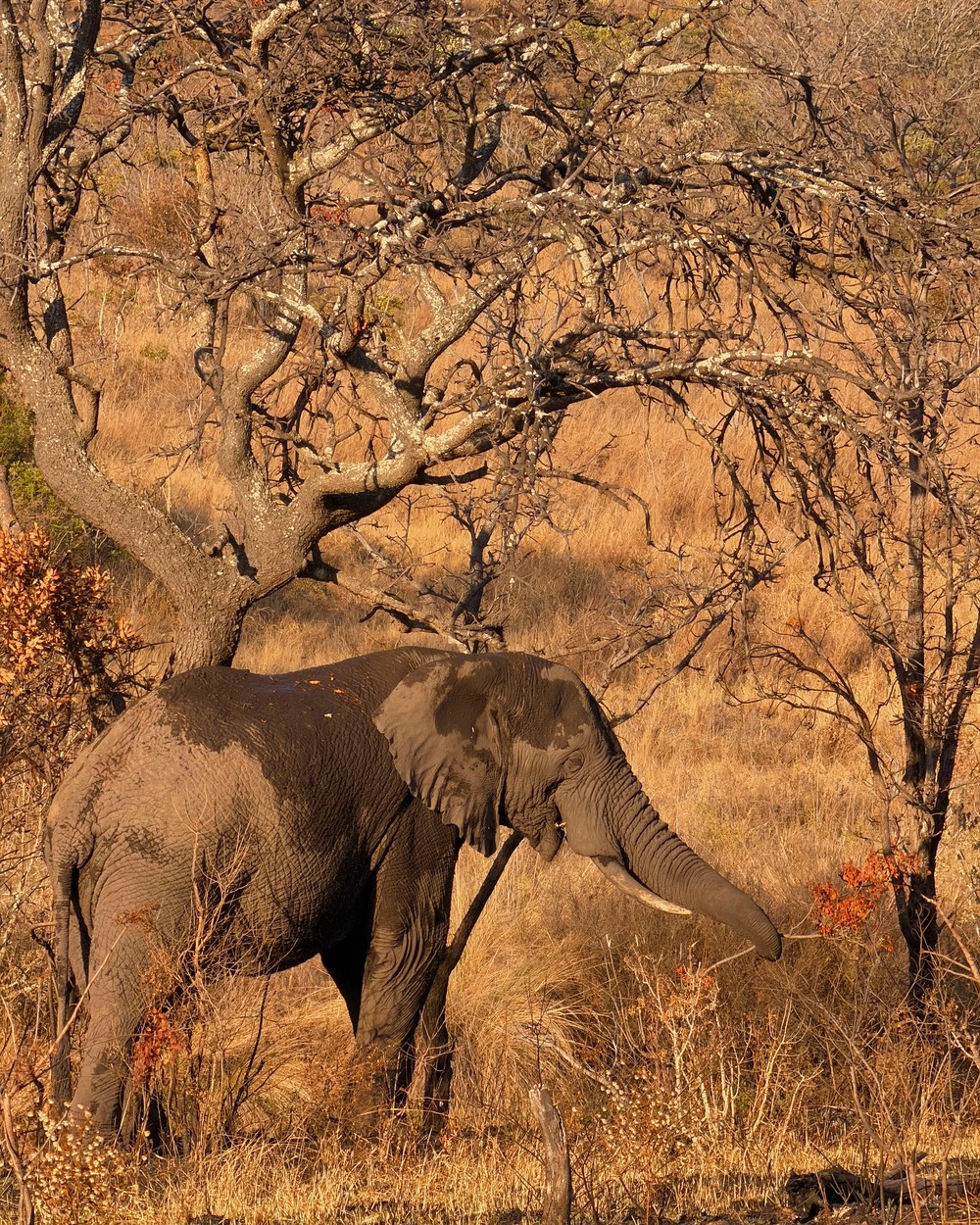
That is where we got the marula story. The fruit ferments on the ground, and the elephants supposedly wait for it, eat it, and get drunk. Phineas told it far better than I am telling it.
Day Five: The Full Day Out, and the Giraffes Steal It
A full day out with a lunch stop by a river. Salad, chicken, croissants, and Daniel putting the chicken inside a croissant, which he has now decided is a permanent combination.
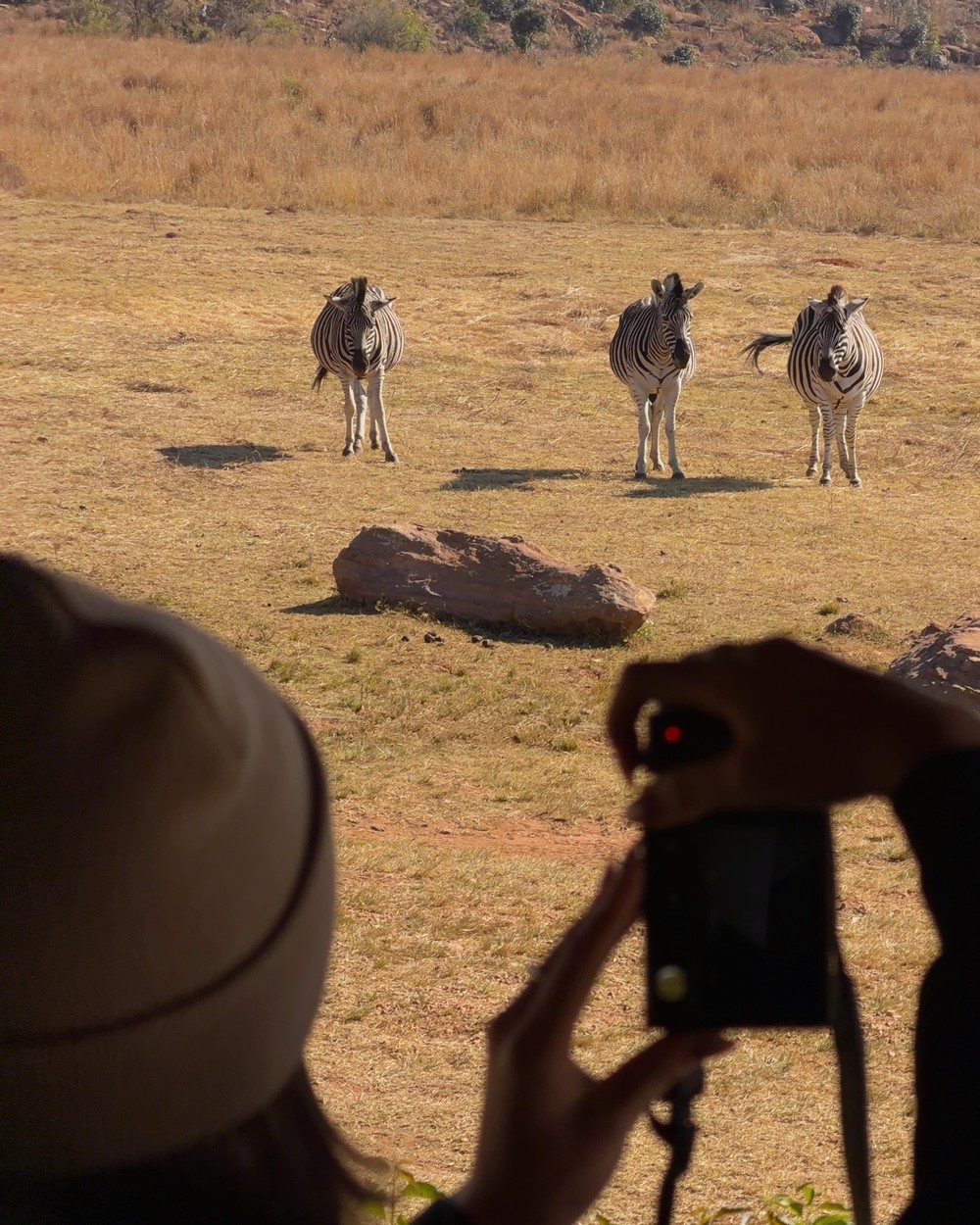
We went out looking for a cheetah that had reportedly taken a baby zebra. We did not find it.
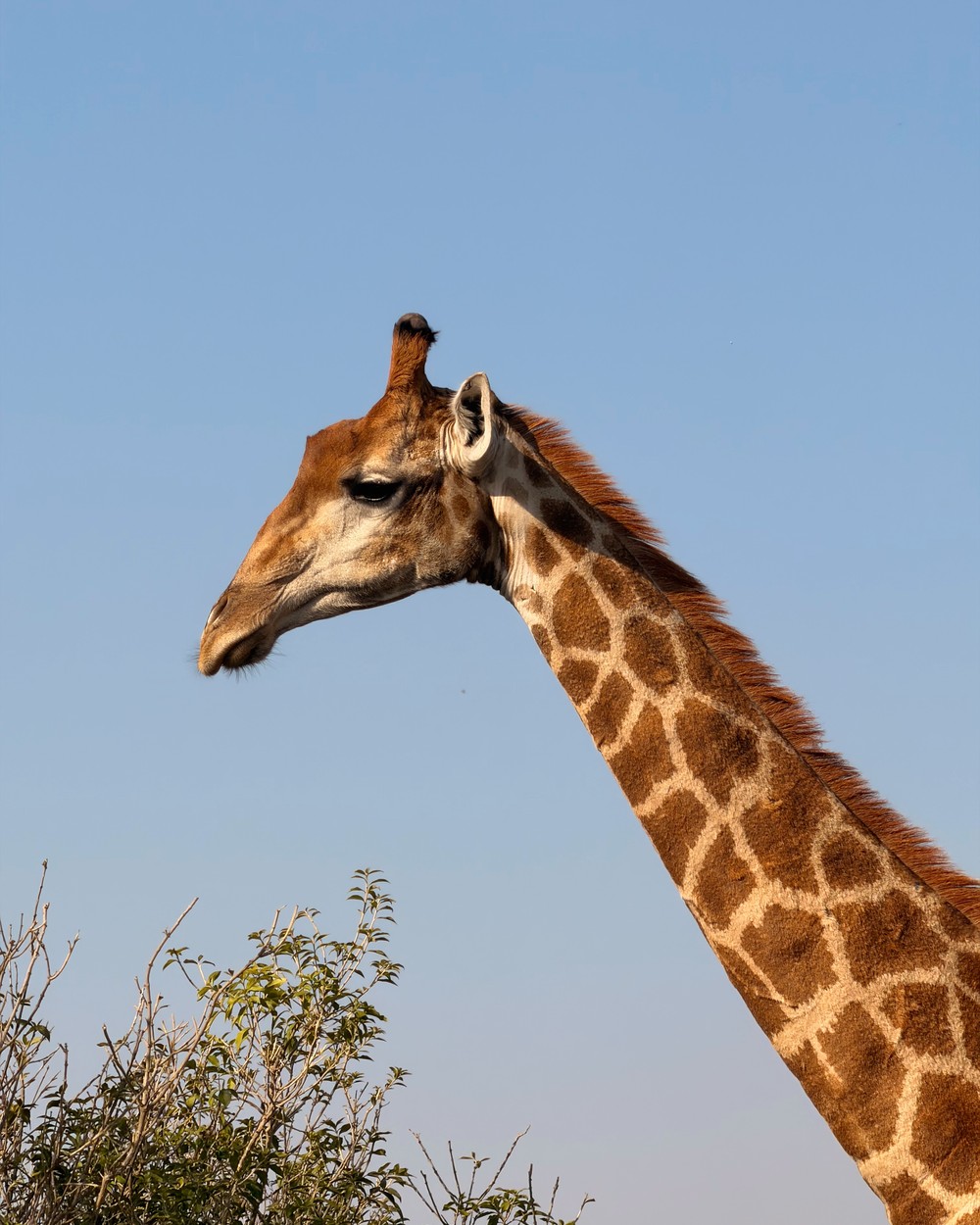
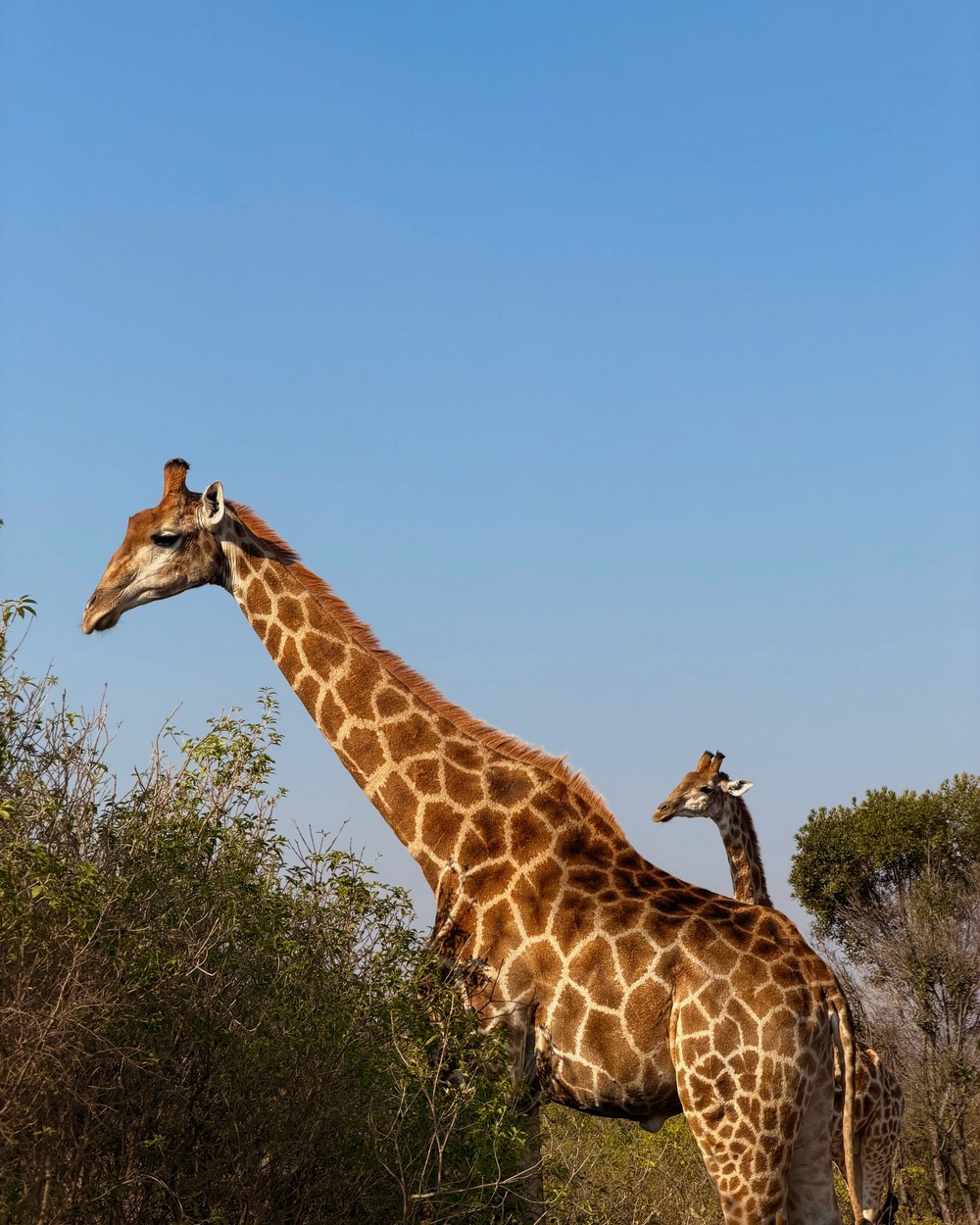
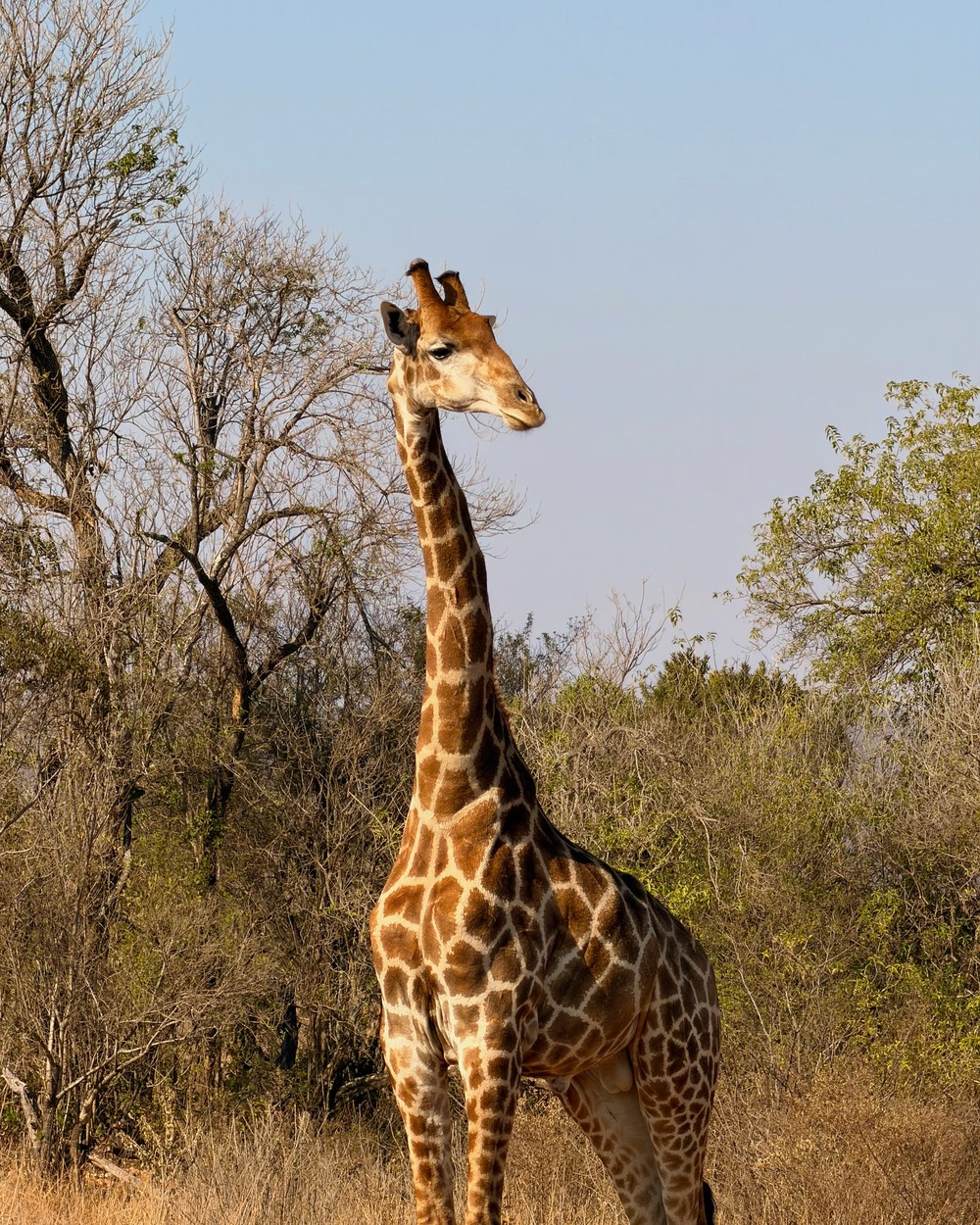
What we found instead was giraffes, and they became my favourite animal of the entire trip. Not a Big Five member, which tells you something about how the Big Five list works.
Some things Phineas told us that I have not stopped repeating since:
- A group of them is called a tower
- Their tongues are nearly 50cm long and bluish purple, so they do not get sunburnt while eating all day
- They sleep as little as 30 minutes a day
- Every pattern is unique, like a fingerprint
- Their heart weighs around 11kg, purely to get blood up that neck
- Calves drop nearly two metres to the ground at birth and are standing within the hour
We also got a better look at lions on this day, lying down, still at a distance but properly visible this time. So lion moves from technically to actually.
The Last Two Days, and the One We Nearly Missed
Day Six: The Leopard, and It Nearly Did Not Happen
Evening drive, and the light had gone.
A leopard walked through the bush in front of us in the dark. It was hard to see, we got a few seconds of it, and that was the entire sighting.
And that was the fifth. All of the Big Five, on the second to last night, in a snippet of an animal moving through undergrowth.
I want to be honest about how that felt, because the internet makes it sound like a triumphant moment. It was more like relief with a bit of disbelief in it. It is the one that could easily have not happened, and if we had been there five days instead of seven we would have gone home with four.
Day Seven: Tracks, and an Elephant Killed by Lightning
The last morning was spent reading tracks, which after a week we were slightly less useless at. We found leopard tracks, which felt like a nice bit of symmetry.
We also stopped at an elephant skull that has been there four years. He was struck by lightning. Standing next to it is a strange thing, and it is the sort of stop you only get with a guide who knows the reserve rather than a route.
So, Is a Week Enough for the Big Five?
Yes, at a private reserve, with the caveat that the leopard is genuinely a coin toss.
Here is the honest breakdown of how hard each one was:
Scroll to see the full table →
| Animal | When we saw it | How hard |
|---|---|---|
| Rhino | Day one, and constantly after | Easy. They were at the lodge |
| Elephant | Day one | Easy |
| Buffalo | Early in the week | Easy, and undramatic |
| Lion | Day one at distance, day five properly | Moderate. Took two goes |
| Leopard | Day six, at night, briefly | Hard. Nearly missed it |
If you have four days rather than seven, expect four of the five and treat a leopard as a bonus rather than a plan.
Meet Phineas, Which Is the Bit I Would Not Skip
At our final sundowner we interviewed our guide properly.
Thirty five years of doing this. His favourite part is meeting people from all over the world, which after thirty five years is a genuinely lovely answer. His favourite animals are elephant and leopard, and he is clear about the order.
His reasoning on elephants stuck with me. They are extremely intelligent, and if you respect them they return the favour, but if you challenge them they will show you how strong they are. Lions get called the king of the jungle, and everything in the bush is actually scared of the elephant.
Watch the Whole Week
Every sighting in this article is in here, including the leopard snippet and the interview with Phineas.
Watch our seven day South African safari on YouTube
Still planning? Here is why July is the month that made it possible.
FAQs About Seeing the Big Five
Can you see the Big Five in a week?
We did, across seven days at a private reserve. Rhino, elephant and buffalo were straightforward, lion took two attempts and the leopard only appeared on day six, at night, for a few seconds.
Which of the Big Five is hardest to see?
The leopard, comfortably. Ours was a brief sighting in the dark on the second to last night, and it easily might not have happened at all.
Which of the Big Five is easiest to see?
Rhino, in our experience, though that will depend heavily on the reserve. There were rhinos at the lodge when we arrived and at the watering hole outside our room.
Is a private game reserve better than a national park for the Big Five?
For sightings, yes. Fewer vehicles, guides who can go off road to follow something, and guides who talk to each other. We only have the private reserve experience to go on, so I cannot compare them from both sides.
How many game drives a day do you do on safari?
Two. One leaving around 6:30 in the morning and one in the late afternoon that finishes with a sundowner stop.
Is Welgevonden malaria free?
Yes. It sits high enough in the Waterberg to be malaria free year round, which is one of the main reasons people choose that part of South Africa. That is from reading rather than from us, so check it against a current source before you plan around it.
What is the best animal on safari?
The Big Five is a hunting list, not a ranking, and it shows. My favourite animal of the entire week was the giraffe, which is not on it.